
From Abattoir to Runway: Leather’s Lifespan & Plant-Based Future
Interview with Mikaila Roncevich by Sara Garcia
From Abattoir to Runway: Leather’s Lifespan & Plant-Based Future
Interview with Mikaila Roncevich by Sara Garcia
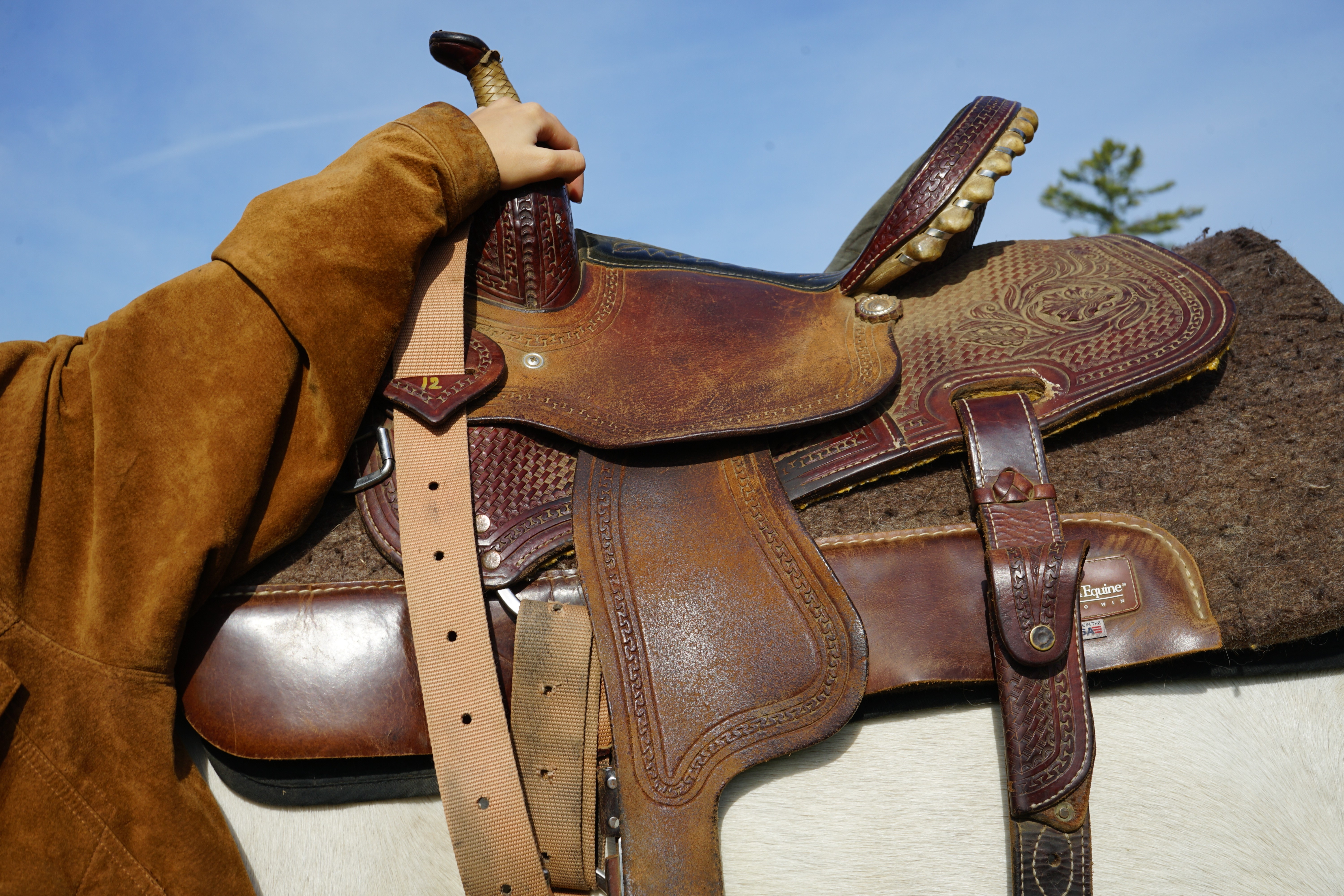
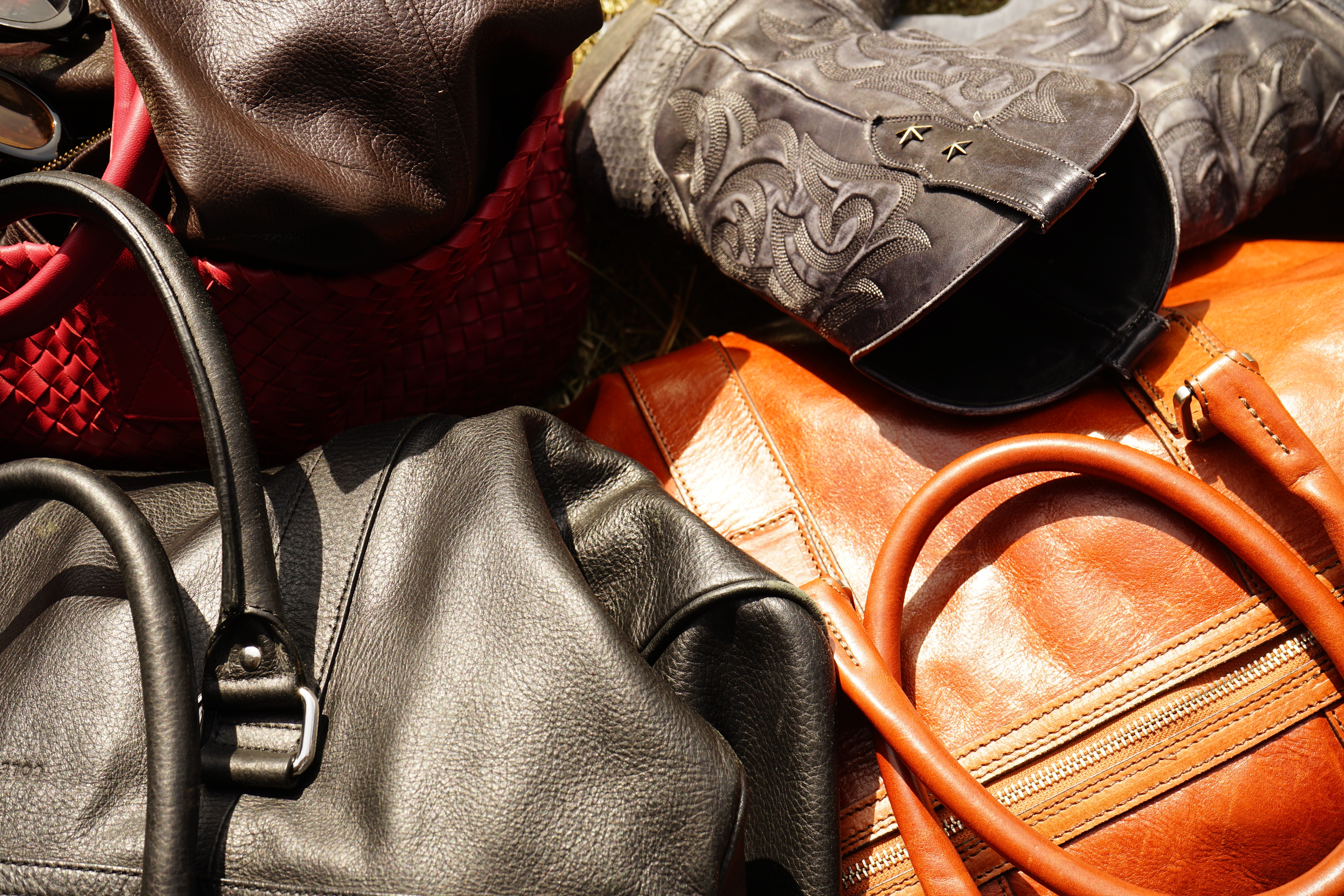
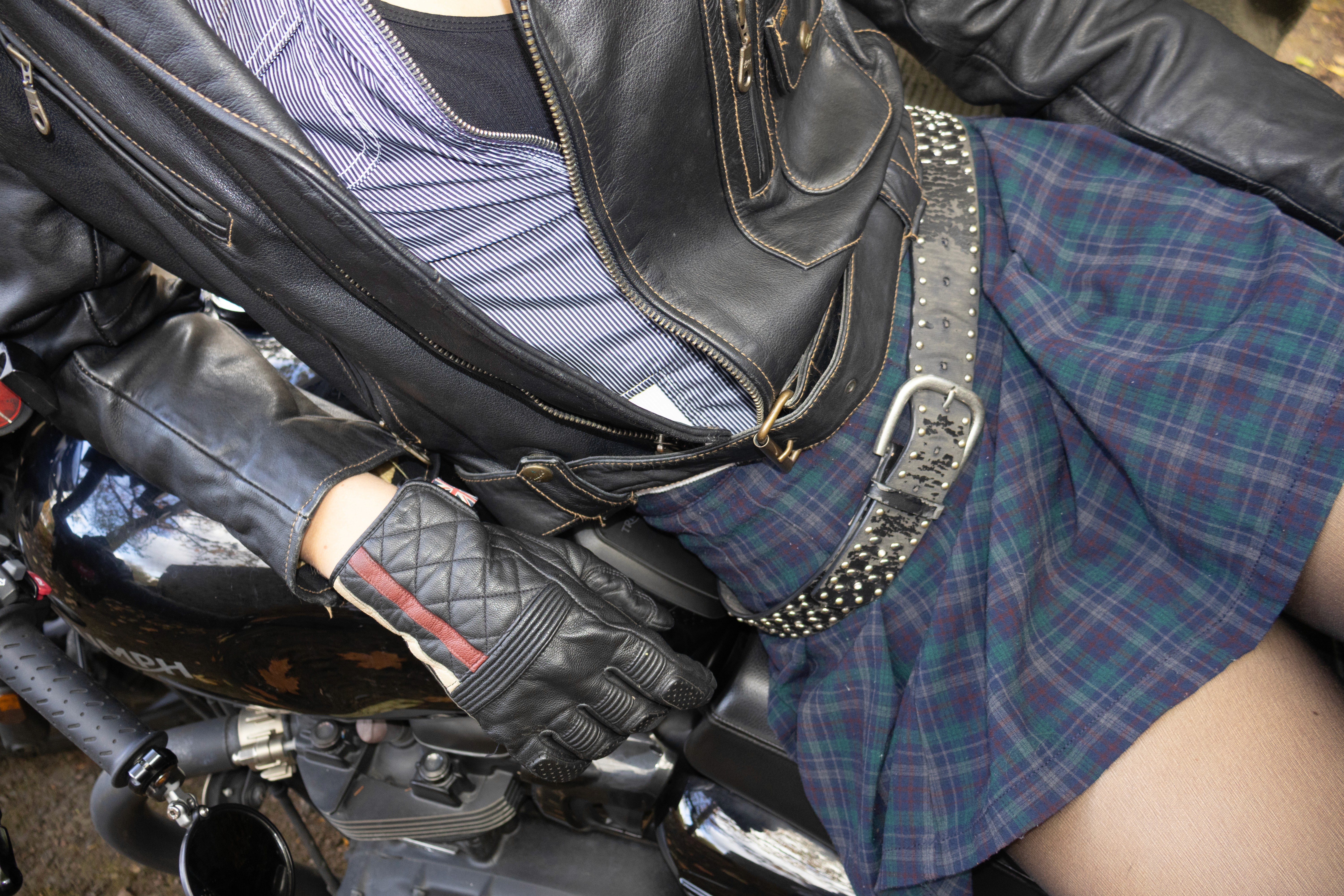
Leather’s ubiquity is undeniable. It is deeply ingrained in a wide variety of industries and cultures, and as American academic Gary Francione stated “...to most people,…using animal products such as leather, wool, and silk, is as normal as breathing air or drinking water.” From industries of luxury, bookbinding, furniture, and agriculture to cultural communities like kink, punk, and motorcycle clubs, leather has represented everything from opulence to durability to rebellion and counterculture. Yet, leather’s very existence is a testament to humanity’s compulsion to subjugate, slaughter, butcher, and refine in the postscript. The leather industry is a small cog in the larger machine of the slaughter industry, in which every fistful of cash is earned soaked in blood. We must begin to interrogate our passivity at the ruthless bloodshed of leather’s origin. Just like its ubiquity, leather’s brutality and strain on natural resources are also undeniable. In the following interview, I spoke with Mikaila Roncevich, Fiber Science researcher and vegan leather accessories designer.
Sara Garcia: The dictionary definition of leather is animal skin dressed for use. As a designer that works with alternative leathers, how do you think your work fits within this scope, and would you use another definition?
Mikaila Roncevich: Definitely, I would say that the use of animal skins is for that animal that it comes from, and it's not for the use of other animals. One of the aims of my work, and one of the reasons why I started doing what I do is because I want to redefine that and I want people to think about leather and the materials that we use to dress ourselves or adorn ourselves.
I want us to think about them differently. I think that's increasingly widely accepted for sure. Humans use other animals' fur to adorn themselves instead of leaving it for the animals that it was made for, but for leather it's a little bit more of a contentious topic because it's so tied to the food industry.
In my master's research I really dug into how important that product is in that industry. And a lot of people want to define it as a waste product that's then used for another kind of product, whether it's for clothing or for transportation or for furniture, but it is a skin for an animal who was killed and then it needs to go through a process to become usable for us. So it's made up of collagen fibers, and those collagen fibers have to be cross-linked in a process called tanning. And a lot of people know it to be pretty toxic because it uses something called chromium, which is a heavy metal.
And a lot of leather proponents claim that vegetable tanned leather is safer. Vegetable tanned leather does not exist in the market. I worked with some scientists who were trying to test vegetable tanned leather and all of the vegetable tanned leather that they sourced, they used something called a mass spectrometer and they found chromium in all of them. So it doesn't really exist on the market. Animal derived leather wouldn't be usable unless we went through a really toxic process. It's really harmful to the workers that do it, usually in third world countries, and if you go to those places, you'll see. The workers look like they have tan skin themselves and they're really young, but they look really aged because that chromium tans their own skin. It's really sad and super carcinogenic. So I think that there is an abundance of materials we can easily use for the same aesthetic and mechanical properties that we're looking for. So if people want to, I hope that we can define leather by how it looks and what its functionality is versus defining it as coming from another animal's life.
Sara Garcia: There are many other luxury materials that could use systemic reform but you chose leather. Why leather? What drew you to this material?
Mikaila Roncevich: I went vegetarian when I was eight years old. I mostly grew up in the south, so that was not something that anyone around me was doing, but I watched this PETA video and I could not even fathom anymore the fact that we ate animals. It was heartbreaking to me. And then in high school I learned more about veganism and I think I watched one documentary and I went vegan overnight because I had no attachment to any animal product. But when I got more information and learned more about the health aspects and the environmental benefits of being entirely plant-based, it was a no brainer for me. I've always been passionate about reducing animal products in our supply chain generally, and when I was little, around the same time that I went vegetarian, I started sewing. I always wanted to be a fashion designer, and I wanted to do something like that and I wanted to make an impact and reduce animal materials in fashion and in food. So leather was always an interest for me because I cared so much about reducing animal products generally.
Sara Garcia: So on your website and Instagram, you state that your brand is against fast fashion, and that at Kaila Katherine, you believe that fashion should do no harm. Cost is a major hurdle preventing people from being free of fast fashion, one that has historically been overcome by thrifting clothing. Where do you stand on thrifted leather?
Mikaila Roncevich: I think as much as we can keep products in circulation, I think that should be the first place people go to buy new clothes. Of course, I love when people find my products and tell me that they're excited by vegan leather and they're excited by my product, but my product is priced based on fair wages for the labor that it takes to make things in small batches locally in the U.S., in New York specifically. But I personally thrift most of my clothes and I would certainly go to a secondhand product before I went to buy a new product unless I believed in the brand in some way or was really attached to a certain silhouette. So yeah, I am a huge proponent of buying things secondhand. I think it's always better than buying something new. I always get excited by people wearing vegan leather and animal free products. I, personally at this point, don't want to buy leather, even if it's secondhand, but I definitely think secondhand is the most sustainable, hands down.
Sara Garcia: Why cactus leather? I was looking at some of your products and you use exclusively cactus leather. But there are other materials that alternative leathers are being made out of (e.g. pineapple (Piñatex), mushroom, and apple). But, as a brand, Kaila Katherine seems to have developed an attachment to the cactus. Can you explain or elaborate?
Mikaila Roncevich: I started with cactus, but the goal is to always work with the most sustainable material that's been developed at the time. So right now, I have a partnership with Uncaged Innovations, and I'm part of this group that they have called the Collective, which is a few brands that they partnered with for their launch of their new material. So we launched a wallet with them that's been on pre-order, but I'll be shipping those out sometime in October. I think that their textile will have the lowest polyurethane content out of all of the leather alternatives available currently. So the goal is to always keep collaborating with new material startups, but for me, time and capital is a barrier, so I want to make sure that I'm always spending time and capital in the best way possible.
I chose cactus leather because at the time that I started, I sourced a whole slew of different materials. There were a lot of them,but for the styles that I wanted to create, cactus leather was the material that was the most appropriate and available. They had a really good system where I could order smaller rolls of fabric which meant that I had less waste in my factory.
Other startups were at a stage where you could only do custom colors and custom finishes, which meant having massive rolls, way bigger than the kind of work that I was doing, and cactus just worked the best for our tools in our factory, and I liked it the most from all of our testing.
So there were a lot of different factors that went into that decision, but it was the most accessible in our factory and it was the most accessible in the quantity that we were looking for. Yeah, the hope is to always support and work with material innovators that are doing something interesting with vegan leathers.
Leather’s ubiquity is undeniable. It is deeply ingrained in a wide variety of industries and cultures, and as American academic Gary Francione stated “...to most people,…using animal products such as leather, wool, and silk, is as normal as breathing air or drinking water.” From industries of luxury, bookbinding, furniture, and agriculture to cultural communities like kink, punk, and motorcycle clubs, leather has represented everything from opulence to durability to rebellion and counterculture. Yet, leather’s very existence is a testament to humanity’s compulsion to subjugate, slaughter, butcher, and refine in the postscript. The leather industry is a small cog in the larger machine of the slaughter industry, in which every fistful of cash is earned soaked in blood. We must begin to interrogate our passivity at the ruthless bloodshed of leather’s origin. Just like its ubiquity, leather’s brutality and strain on natural resources are also undeniable. In the following interview, I spoke with Mikaila Roncevich, Fiber Science researcher and vegan leather accessories designer.
Sara Garcia: The dictionary definition of leather is animal skin dressed for use. As a designer that works with alternative leathers, how do you think your work fits within this scope, and would you use another definition?
Mikaila Roncevich: Definitely, I would say that the use of animal skins is for that animal that it comes from, and it's not for the use of other animals. One of the aims of my work, and one of the reasons why I started doing what I do is because I want to redefine that and I want people to think about leather and the materials that we use to dress ourselves or adorn ourselves.
I want us to think about them differently. I think that's increasingly widely accepted for sure. Humans use other animals' fur to adorn themselves instead of leaving it for the animals that it was made for, but for leather it's a little bit more of a contentious topic because it's so tied to the food industry.
In my master's research I really dug into how important that product is in that industry. And a lot of people want to define it as a waste product that's then used for another kind of product, whether it's for clothing or for transportation or for furniture, but it is a skin for an animal who was killed and then it needs to go through a process to become usable for us. So it's made up of collagen fibers, and those collagen fibers have to be cross-linked in a process called tanning. And a lot of people know it to be pretty toxic because it uses something called chromium, which is a heavy metal.
And a lot of leather proponents claim that vegetable tanned leather is safer. Vegetable tanned leather does not exist in the market. I worked with some scientists who were trying to test vegetable tanned leather and all of the vegetable tanned leather that they sourced, they used something called a mass spectrometer and they found chromium in all of them. So it doesn't really exist on the market. Animal derived leather wouldn't be usable unless we went through a really toxic process. It's really harmful to the workers that do it, usually in third world countries, and if you go to those places, you'll see. The workers look like they have tan skin themselves and they're really young, but they look really aged because that chromium tans their own skin. It's really sad and super carcinogenic. So I think that there is an abundance of materials we can easily use for the same aesthetic and mechanical properties that we're looking for. So if people want to, I hope that we can define leather by how it looks and what its functionality is versus defining it as coming from another animal's life.
Sara Garcia: There are many other luxury materials that could use systemic reform but you chose leather. Why leather? What drew you to this material?
Mikaila Roncevich: I went vegetarian when I was eight years old. I mostly grew up in the south, so that was not something that anyone around me was doing, but I watched this PETA video and I could not even fathom anymore the fact that we ate animals. It was heartbreaking to me. And then in high school I learned more about veganism and I think I watched one documentary and I went vegan overnight because I had no attachment to any animal product. But when I got more information and learned more about the health aspects and the environmental benefits of being entirely plant-based, it was a no brainer for me. I've always been passionate about reducing animal products in our supply chain generally, and when I was little, around the same time that I went vegetarian, I started sewing. I always wanted to be a fashion designer, and I wanted to do something like that and I wanted to make an impact and reduce animal materials in fashion and in food. So leather was always an interest for me because I cared so much about reducing animal products generally.
Sara Garcia: So on your website and Instagram, you state that your brand is against fast fashion, and that at Kaila Katherine, you believe that fashion should do no harm. Cost is a major hurdle preventing people from being free of fast fashion, one that has historically been overcome by thrifting clothing. Where do you stand on thrifted leather?
Mikaila Roncevich: I think as much as we can keep products in circulation, I think that should be the first place people go to buy new clothes. Of course, I love when people find my products and tell me that they're excited by vegan leather and they're excited by my product, but my product is priced based on fair wages for the labor that it takes to make things in small batches locally in the U.S., in New York specifically. But I personally thrift most of my clothes and I would certainly go to a secondhand product before I went to buy a new product unless I believed in the brand in some way or was really attached to a certain silhouette. So yeah, I am a huge proponent of buying things secondhand. I think it's always better than buying something new. I always get excited by people wearing vegan leather and animal free products. I, personally at this point, don't want to buy leather, even if it's secondhand, but I definitely think secondhand is the most sustainable, hands down.
Sara Garcia: Why cactus leather? I was looking at some of your products and you use exclusively cactus leather. But there are other materials that alternative leathers are being made out of (e.g. pineapple (Piñatex), mushroom, and apple). But, as a brand, Kaila Katherine seems to have developed an attachment to the cactus. Can you explain or elaborate?
Mikaila Roncevich: I started with cactus, but the goal is to always work with the most sustainable material that's been developed at the time. So right now, I have a partnership with Uncaged Innovations, and I'm part of this group that they have called the Collective, which is a few brands that they partnered with for their launch of their new material. So we launched a wallet with them that's been on pre-order, but I'll be shipping those out sometime in October. I think that their textile will have the lowest polyurethane content out of all of the leather alternatives available currently. So the goal is to always keep collaborating with new material startups, but for me, time and capital is a barrier, so I want to make sure that I'm always spending time and capital in the best way possible.
I chose cactus leather because at the time that I started, I sourced a whole slew of different materials. There were a lot of them,but for the styles that I wanted to create, cactus leather was the material that was the most appropriate and available. They had a really good system where I could order smaller rolls of fabric which meant that I had less waste in my factory.
Other startups were at a stage where you could only do custom colors and custom finishes, which meant having massive rolls, way bigger than the kind of work that I was doing, and cactus just worked the best for our tools in our factory, and I liked it the most from all of our testing.
So there were a lot of different factors that went into that decision, but it was the most accessible in our factory and it was the most accessible in the quantity that we were looking for. Yeah, the hope is to always support and work with material innovators that are doing something interesting with vegan leathers.
Sara Garcia: I'm very interested in how cactus leather is produced. What's the farm to table breakdown?
Mikaila Roncevich: So the cactus that they use is the prickly pear cactus, and it's native to the region where it's made in Guadalajara, Mexico. The owners of the startup, they're both from Guadalajara. Basically, they cut the cactus in a way that they don't have to ever replant the cactus. They just re-harvest whenever it's time to cut the leaves off again. And then they sun-dry the cutoffs and they take those dried plants and grind it into fiber, and they take that cellulose material from that and they mix it into the formula that they use for the leather.
Sara Garcia: Can I ask about the average wear of your products? How do they wear and how long do they last?
Mikaila Roncevich: So there's animal derived leather that can have a range of different durability and it's all based on that tanning process that I mentioned, and also the life of the cow that it came from, and also the coatings on the animal leather. A lot of them are coated themselves with PVC or polyurethane to get custom types of finishes and durability. Vegan leather can have a range of durability and the properties of the cactus leather that I use is super resilient, even if you leave the bag scrunched up or crumpled for a certain amount of time. I've been using my original samples myself since 2020 and I still use them all the time and they've seen a lot of travel. I'm super proud to show that they still are holding up well. I think ever since I made my first product, the durability and the properties of these materials have gotten increasingly better. Something that's true of both animal leather and plant leather is that sometimes the more harmful inputs you use, the better and the longer lasting your material is. Obviously because organic matter should degrade. So the more tough and harmful coatings or cross linkers that you use, the more durable it might be.
Sara Garcia: I feel like people gravitate towards leather specifically because of its aesthetic, material properties, and its connotations within culture. Specifically in American culture, it has heavy connotations with, with most mainstream, like the rock scene. And so it seems badass and like a very sleek material. But that's when you don't really scratch the surface. Once you start to do a little research of your own, it takes away from that beauty.
Mikaila Roncevich: Yeah, my master's research I got really into the environmental footprints and the methodologies for those footprints for leather, and they're really complicated because you have to factor in different parts of an animal's life to be able to determine what the worth or the importance of a hide is in the overall process, because different amounts of emissions and impacts should go to meat, or should go to other co-products in that process.
I found that generally the footprint for leather should be a lot higher than it is. 88% of the emissions immediately at the farming level are allocated to dairy. Those really expensive hides, they come from animals that never produce milk. I think there's a lack of understanding about how important leather is and what kind of importance leather plays at the farm level.
The highest priced hides also come from animals that don't have sun damage or skin damage or bruises or bug bites or any kind of blemishes and those happen to animals naturally if they are living a life outdoors and a long life. It can drive decisions on the farm where they're kept out of the sunlight their whole lives, and in really small pens so that they never scratch their skin.
It becomes a welfare issue. The prices of hides will vary from farm to farm, region to region, and also the quality of the hides, as in whether they have blemishes or not. I think if people care about those experiences of the animals, I think you have to step away or be aware of the cognitive dissonance that comes with seeing something that's beautiful to your eyes on the rack, and then think about how that product got there, why it's so smooth, why it's so soft. The smoother and softer it is, the younger that animal was that was killed for that product. I think it's badass to reject these antiquated ideas that we've developed over time where we're exploiting other beings to get materials that we don't really need.
I think it's so cool for us to reject that over something that's more aligned with your beliefs or modern civilization and modern technology. And plant leathers, of course, can look the same.
Sara Garcia: On the spectrum of leather to leather where do you think your alternative leathers fit, if at all?
Mikaila Roncevich: I think that definition should be fluid. I guess it goes back to what we were talking about in the beginning, which is like what the definition of leather should be and what it is to me. I think leather is just something that has certain properties, mechanical properties and aesthetic properties, and there's a range of more sustainable to less sustainable. I think animal derived leather is at the least sustainable end of the spectrum, and depending on what metrics you're looking at. Even the most egregious fossil derived leather, based on many environmental impacts, is still not as harmful as animal derived leather when you're talking about greenhouse gases, waste water, and solid waste. And the plant leathers that are being made now and the ones that I'm using have almost zero impacts in all of those categories from greenhouse gas emissions to toxic water runoff, and so they're unbelievably sustainable. So I guess all of these terms have different definitions to different people. I think based on what your attachments are to certain traditions, which is another debate and topic, but based on your attachments to certain ideas of what those materials should be and where they should come from and what their origins should be.
I would say it's like a spectrum of less sustainable to more sustainable. Definitely. The materials that I use contain only polyurethane made with plant derived polyols, which is one of the components to make polyurethane.
You can either use fossil derived polyols or corn, soy or other plant-derived polyol components. The materials that I work with don't have fossil derived components.
Sara Garcia: I see. It's more of a progression towards that net zero goal.
Mikaila Roncevich: Totally. And I even think that progress is not the enemy of perfection and I think that as much as we can make these transitions towards animal free materials whether it's from a startup or a company that's using less plant cellulose versus a company that is using more plant cellulose. I think that any transition we're using virgin animal derived materials is a win, and those companies need support from the industry and customers to be able to keep developing, to get better sustainability metrics.
Sara Garcia: I'm very interested in how cactus leather is produced. What's the farm to table breakdown?
Mikaila Roncevich: So the cactus that they use is the prickly pear cactus, and it's native to the region where it's made in Guadalajara, Mexico. The owners of the startup, they're both from Guadalajara. Basically, they cut the cactus in a way that they don't have to ever replant the cactus. They just re-harvest whenever it's time to cut the leaves off again. And then they sun-dry the cutoffs and they take those dried plants and grind it into fiber, and they take that cellulose material from that and they mix it into the formula that they use for the leather.
Sara Garcia: Can I ask about the average wear of your products? How do they wear and how long do they last?
Mikaila Roncevich: So there's animal derived leather that can have a range of different durability and it's all based on that tanning process that I mentioned, and also the life of the cow that it came from, and also the coatings on the animal leather. A lot of them are coated themselves with PVC or polyurethane to get custom types of finishes and durability. Vegan leather can have a range of durability and the properties of the cactus leather that I use is super resilient, even if you leave the bag scrunched up or crumpled for a certain amount of time. I've been using my original samples myself since 2020 and I still use them all the time and they've seen a lot of travel. I'm super proud to show that they still are holding up well. I think ever since I made my first product, the durability and the properties of these materials have gotten increasingly better. Something that's true of both animal leather and plant leather is that sometimes the more harmful inputs you use, the better and the longer lasting your material is. Obviously because organic matter should degrade. So the more tough and harmful coatings or cross linkers that you use, the more durable it might be.
Sara Garcia: I feel like people gravitate towards leather specifically because of its aesthetic, material properties, and its connotations within culture. Specifically in American culture, it has heavy connotations with, with most mainstream, like the rock scene. And so it seems badass and like a very sleek material. But that's when you don't really scratch the surface. Once you start to do a little research of your own, it takes away from that beauty.
Mikaila Roncevich: Yeah, my master's research I got really into the environmental footprints and the methodologies for those footprints for leather, and they're really complicated because you have to factor in different parts of an animal's life to be able to determine what the worth or the importance of a hide is in the overall process, because different amounts of emissions and impacts should go to meat, or should go to other co-products in that process.
I found that generally the footprint for leather should be a lot higher than it is. 88% of the emissions immediately at the farming level are allocated to dairy. Those really expensive hides, they come from animals that never produce milk. I think there's a lack of understanding about how important leather is and what kind of importance leather plays at the farm level.
The highest priced hides also come from animals that don't have sun damage or skin damage or bruises or bug bites or any kind of blemishes and those happen to animals naturally if they are living a life outdoors and a long life. It can drive decisions on the farm where they're kept out of the sunlight their whole lives, and in really small pens so that they never scratch their skin.
It becomes a welfare issue. The prices of hides will vary from farm to farm, region to region, and also the quality of the hides, as in whether they have blemishes or not. I think if people care about those experiences of the animals, I think you have to step away or be aware of the cognitive dissonance that comes with seeing something that's beautiful to your eyes on the rack, and then think about how that product got there, why it's so smooth, why it's so soft. The smoother and softer it is, the younger that animal was that was killed for that product. I think it's badass to reject these antiquated ideas that we've developed over time where we're exploiting other beings to get materials that we don't really need.
I think it's so cool for us to reject that over something that's more aligned with your beliefs or modern civilization and modern technology. And plant leathers, of course, can look the same.
Sara Garcia: On the spectrum of leather to leather where do you think your alternative leathers fit, if at all?
Mikaila Roncevich: I think that definition should be fluid. I guess it goes back to what we were talking about in the beginning, which is like what the definition of leather should be and what it is to me. I think leather is just something that has certain properties, mechanical properties and aesthetic properties, and there's a range of more sustainable to less sustainable. I think animal derived leather is at the least sustainable end of the spectrum, and depending on what metrics you're looking at. Even the most egregious fossil derived leather, based on many environmental impacts, is still not as harmful as animal derived leather when you're talking about greenhouse gases, waste water, and solid waste. And the plant leathers that are being made now and the ones that I'm using have almost zero impacts in all of those categories from greenhouse gas emissions to toxic water runoff, and so they're unbelievably sustainable. So I guess all of these terms have different definitions to different people. I think based on what your attachments are to certain traditions, which is another debate and topic, but based on your attachments to certain ideas of what those materials should be and where they should come from and what their origins should be.
I would say it's like a spectrum of less sustainable to more sustainable. Definitely. The materials that I use contain only polyurethane made with plant derived polyols, which is one of the components to make polyurethane.
You can either use fossil derived polyols or corn, soy or other plant-derived polyol components. The materials that I work with don't have fossil derived components.
Sara Garcia: I see. It's more of a progression towards that net zero goal.
Mikaila Roncevich: Totally. And I even think that progress is not the enemy of perfection and I think that as much as we can make these transitions towards animal free materials whether it's from a startup or a company that's using less plant cellulose versus a company that is using more plant cellulose. I think that any transition we're using virgin animal derived materials is a win, and those companies need support from the industry and customers to be able to keep developing, to get better sustainability metrics.
Sara Garcia: Now on the more fashion oriented side of things can I ask you to describe your creative process? When you're crafting your alternative leather products, where is your square one and where do you draw inspiration?
Mikaila Roncevich: Okay. My inspiration is I really wanted to make staple pieces and I wanted to grow slowly. I didn't want to overproduce, I wanted to test the products, grow a customer base and then grow my range of silhouettes. I wanted my pieces to be able to fit for work and for school, and then some smaller pieces that are meant for going out. The wallet is obviously super functional, built mostly around the idea that people have transitioned to only using cards versus cash.
So functionality was a big part of the design process, and then I would say other than that there are brands I draw inspiration from. I love the Row. I love old Celine. I'm loving Chloe these days. I think functional, sleek, simple, versatile is really what I'm aiming for. And then when it comes to campaigns and developing a personality for the brand or the website or the Instagram, I'm really lucky that a lot of my friends that I went to college with love to have a creative outlet outside of their consulting or finance jobs.
It's just a fun thing that we'll do together sometimes. That's how it started; it was just my friends and I trying things out and then as time went on, we got more professional and we're hiring more models that either were a friend of mine or a friend of a friend and working with more photographers that are amazing at their craft.
There's a photographer that I've been working with who reached out to me on Instagram a couple years ago. She just wanted to do some product images for her portfolio, and now we work with her as a photographer that we hire. I feel like the personality of the brand has been touched by all of the people around me that I trust and their taste and their vision.
Everyone's on board with what kind of story we want to tell in a photo shoot, but it's just a collaboration and we, yeah, just a lot of different input to get to the ultimately, like the story or the voice we want to have and the images. Everyone is just finding their voice, and just starting out and growing.
Sara Garcia: This is also more of a design/construction standpoint question, but is working with alternative leathers easier from a design/construction standpoint? Compared to standard animal derived leather?
Mikaila Roncevich: It’s just different. The material behaves so differently from animal leather and it's because its chemical makeup is so different. The materials that I used in our factory at first, they rejected the adhesives that we were using. They rejected hot foil stamping. They rejected all sorts of stuff. It was really interesting to explore what new techniques you have to use on the factory level to be able to design a product with the material’s properties in mind, which is, from what I understand from other people, whether it's in luxury fashion or just any factory that makes leather products, one of the biggest barriers for incorporating plant derived materials into their supply chain because the factories work in a line. So if you want to change one component of the design or one input of the materials, it trickles down to the whole rest of the line, and if you're going to mess with or test one step, it's going to delay the whole process on the back end. That was something that I ran into. In the factory, it took twice as long, and of course I had to pay for all of the time that they're spending to retry and retry. Factories also work on a tight schedule where they can have another client coming in for their product and the client uses up the whole line. It's very hard to introduce new practices to your factories, and for my wallet that I'm working on, I moved my production to a small goods factory in Italy. These Italian factories are so old school, it's really hard to change what they're doing.
I think that's also a reason why we don't see a lot of plant leather or sustainable material products gaining traction within these luxury brands. Definitely, I wouldn't say that it's harder, but it's a different material, so you have to treat it differently in the process and you can't just brute force the same manner of construction that you do with animal skin.
Sara Garcia: What do you believe is in store for the future of leather?
Mikaila Roncevich: Oh, I think that animal leather as we know it, is going to be phased out in the future. I think this is really controversial, but I think we're moving towards more alternative proteins in the food system. I think we've hit a lot of road bumps in terms of initial adoption or initial scale of different companies and practices. The more that these materials develop and the more the startups develop, the more we move away from animal materials and proteins. What we have on our planet is not enough to sustain animal farming anywhere close to the scale that it is currently operating at. It's self-destructive. I absolutely think that we will move more towards animal free materials just out of necessity because from climate change to deforestation and a whole list of problems that come with animal agriculture, it's just not sustainable long term at all.
We need those solutions, and I think it's inevitable.
Sara Garcia: There’s this inertial push towards our own ruin on this planet.
Mikaila Roncevich: Many of those arguing for the use of animal leather say that it's important to preserve the heritage and the tradition of these materials. People said that about the cotton industry. People said that about so many industries, even beyond textile production. It is, I think, a grotesque excuse. Attachment to historical exploitation to make an excuse for clinging to this practice that we know is so harmful for so many people. For the communities around these farms, for the animals themselves, and thinking about them as disposable objects and tools for profit and for enjoyment is, to me, horrifying. The pushback I expected from all of those people in those industries, I was not expecting to be confronted with heritage and tradition so frequently as reasons why we should throw away innovation and even just science, like good environmental reporting. I think that is definitely really a big issue for the textile industry and we don't really see that with other industries. I think we see that in the initial stages, like when a technology is improving, and we saw that in first computers and then AI, I think there's always an initial questioning. But for fashion and for textiles, I do not see why, for any logical reason other than emotional attachment and the fact that people who have built their livelihoods in exploiting these systems, I don't have any reason why we should maintain them.
Sara Garcia: Now on the more fashion oriented side of things can I ask you to describe your creative process? When you're crafting your alternative leather products, where is your square one and where do you draw inspiration?
Mikaila Roncevich: Okay. My inspiration is I really wanted to make staple pieces and I wanted to grow slowly. I didn't want to overproduce, I wanted to test the products, grow a customer base and then grow my range of silhouettes. I wanted my pieces to be able to fit for work and for school, and then some smaller pieces that are meant for going out. The wallet is obviously super functional, built mostly around the idea that people have transitioned to only using cards versus cash.
So functionality was a big part of the design process, and then I would say other than that there are brands I draw inspiration from. I love the Row. I love old Celine. I'm loving Chloe these days. I think functional, sleek, simple, versatile is really what I'm aiming for. And then when it comes to campaigns and developing a personality for the brand or the website or the Instagram, I'm really lucky that a lot of my friends that I went to college with love to have a creative outlet outside of their consulting or finance jobs.
It's just a fun thing that we'll do together sometimes. That's how it started; it was just my friends and I trying things out and then as time went on, we got more professional and we're hiring more models that either were a friend of mine or a friend of a friend and working with more photographers that are amazing at their craft.
There's a photographer that I've been working with who reached out to me on Instagram a couple years ago. She just wanted to do some product images for her portfolio, and now we work with her as a photographer that we hire. I feel like the personality of the brand has been touched by all of the people around me that I trust and their taste and their vision.
Everyone's on board with what kind of story we want to tell in a photo shoot, but it's just a collaboration and we, yeah, just a lot of different input to get to the ultimately, like the story or the voice we want to have and the images. Everyone is just finding their voice, and just starting out and growing.
Sara Garcia: This is also more of a design/construction standpoint question, but is working with alternative leathers easier from a design/construction standpoint? Compared to standard animal derived leather?
Mikaila Roncevich: It’s just different. The material behaves so differently from animal leather and it's because its chemical makeup is so different. The materials that I used in our factory at first, they rejected the adhesives that we were using. They rejected hot foil stamping. They rejected all sorts of stuff. It was really interesting to explore what new techniques you have to use on the factory level to be able to design a product with the material’s properties in mind, which is, from what I understand from other people, whether it's in luxury fashion or just any factory that makes leather products, one of the biggest barriers for incorporating plant derived materials into their supply chain because the factories work in a line. So if you want to change one component of the design or one input of the materials, it trickles down to the whole rest of the line, and if you're going to mess with or test one step, it's going to delay the whole process on the back end. That was something that I ran into. In the factory, it took twice as long, and of course I had to pay for all of the time that they're spending to retry and retry. Factories also work on a tight schedule where they can have another client coming in for their product and the client uses up the whole line. It's very hard to introduce new practices to your factories, and for my wallet that I'm working on, I moved my production to a small goods factory in Italy. These Italian factories are so old school, it's really hard to change what they're doing.
I think that's also a reason why we don't see a lot of plant leather or sustainable material products gaining traction within these luxury brands. Definitely, I wouldn't say that it's harder, but it's a different material, so you have to treat it differently in the process and you can't just brute force the same manner of construction that you do with animal skin.
Sara Garcia: What do you believe is in store for the future of leather?
Mikaila Roncevich: Oh, I think that animal leather as we know it, is going to be phased out in the future. I think this is really controversial, but I think we're moving towards more alternative proteins in the food system. I think we've hit a lot of road bumps in terms of initial adoption or initial scale of different companies and practices. The more that these materials develop and the more the startups develop, the more we move away from animal materials and proteins. What we have on our planet is not enough to sustain animal farming anywhere close to the scale that it is currently operating at. It's self-destructive. I absolutely think that we will move more towards animal free materials just out of necessity because from climate change to deforestation and a whole list of problems that come with animal agriculture, it's just not sustainable long term at all.
We need those solutions, and I think it's inevitable.
Sara Garcia: There’s this inertial push towards our own ruin on this planet.
Mikaila Roncevich: Many of those arguing for the use of animal leather say that it's important to preserve the heritage and the tradition of these materials. People said that about the cotton industry. People said that about so many industries, even beyond textile production. It is, I think, a grotesque excuse. Attachment to historical exploitation to make an excuse for clinging to this practice that we know is so harmful for so many people. For the communities around these farms, for the animals themselves, and thinking about them as disposable objects and tools for profit and for enjoyment is, to me, horrifying. The pushback I expected from all of those people in those industries, I was not expecting to be confronted with heritage and tradition so frequently as reasons why we should throw away innovation and even just science, like good environmental reporting. I think that is definitely really a big issue for the textile industry and we don't really see that with other industries. I think we see that in the initial stages, like when a technology is improving, and we saw that in first computers and then AI, I think there's always an initial questioning. But for fashion and for textiles, I do not see why, for any logical reason other than emotional attachment and the fact that people who have built their livelihoods in exploiting these systems, I don't have any reason why we should maintain them.

This organization is a registered student organization of Cornell University.

This organization is a registered student organization of Cornell University.
This organization is a registered student organization of Cornell University.